Closing the Last-Mile Gap: How Shared Mobility Tech Bridges Local Transportation Deserts
How Regional Operators are Leveraging On-Demand Shared Transit APIs to Secure Municipal Contracts
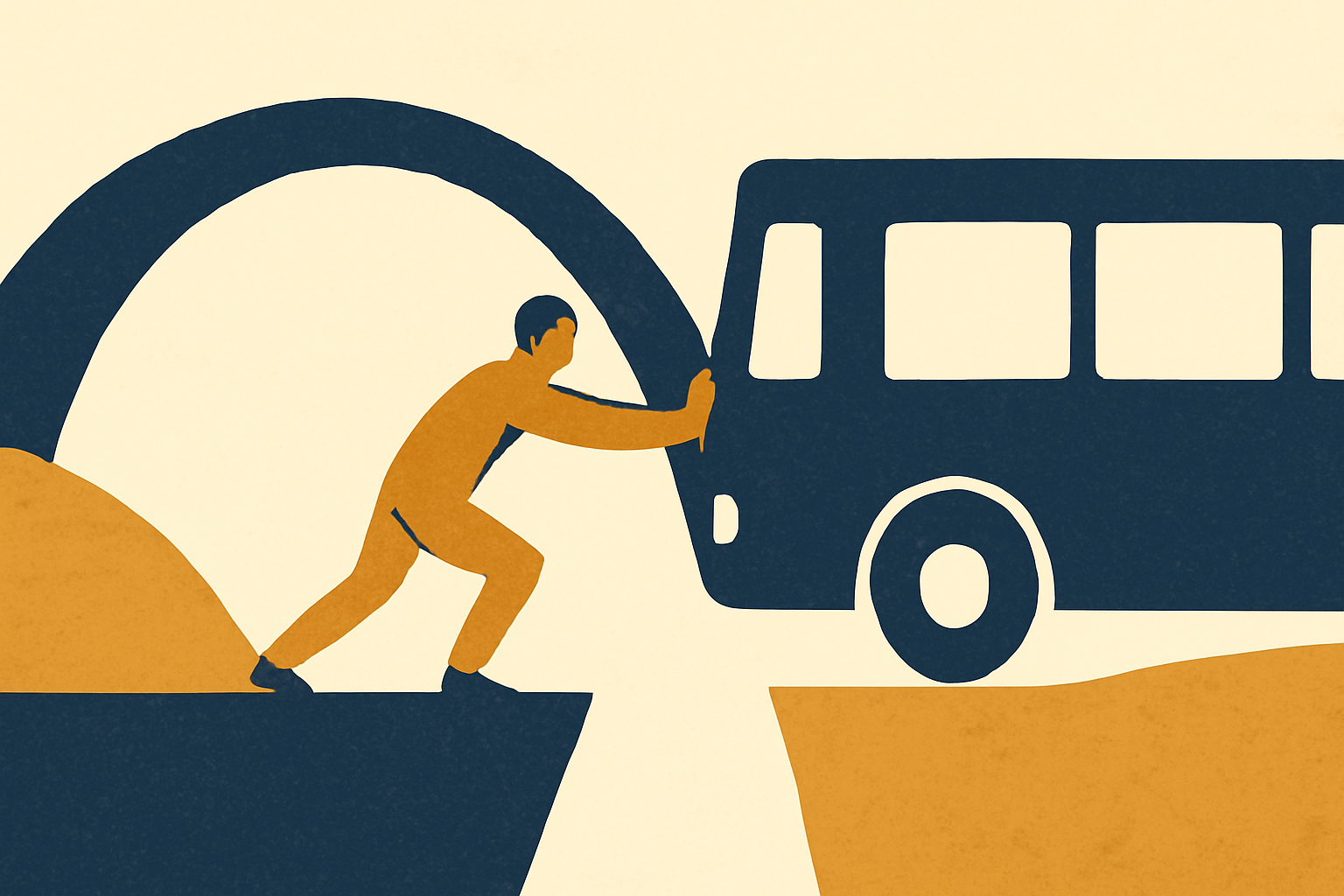
As traditional public transit networks contract, local business operators are finding new revenue streams by stepping into the void left by discontinued bus routes and declining taxi availability. Last updated October 24, 2024, the Google Maps Platform team highlighted how integrated mapping technology is now the cornerstone of the B2G2C (Business-to-Government-to-Consumer) model. By utilizing a robust on-demand shared transit API, private operators can offer the reliability and granular data reporting required by municipal governments to serve vulnerable populations in transportation deserts.
The Rise of the B2G2C Model in Local Logistics
For most local service providers, the path to growth has traditionally been purely B2C (Business-to-Consumer) or B2B (Business-to-Business). However, a new archetype is emerging: the B2G2C provider. In this framework, a private entity—such as a 12-location HVAC operator with a local fleet or a dedicated transportation startup—contracts with a local government to solve a public utility problem.
We see this shift as a direct response to the "last-mile" problem. When mass transit stops just short of a residential area or a healthcare facility, the community suffers. Municipalities are increasingly eager to fund private-sector solutions that bridge these gaps, provided the service can prove its uptime and safety. Community Mobility Inc., a joint venture between WILLER Co. and KDDI, recently demonstrated this by pivoting from purely commercial intercity travel to co-designing mobility systems with Japanese municipalities. This partnership allows the company to align with public transportation regulations while tailoring services to specific community needs, such as elderly residents who have returned their driver’s licenses.
Can an On-Demand Shared Transit API Actually Secure Contracts?
When bidding for municipal contracts, the primary concern for government stakeholders is service stability. A dental practice in Leeds or a regional shuttle service in the Midwest cannot compete for public funds if their dispatch logic is prone to failure or if their estimated time of arrival (ETA) data is unreliable.
Before the maturation of these APIs, operators often relied on fragmented systems that required manual oversight for route adjustments. Today, the integration of on-demand shared transit API tools allows for "significantly higher uptime compared to other solutions," according to Tsuyoshi Nagahashi of Community Mobility. For a government agency, the platform's reliability is a critical selling point because it ensures that public transportation—now a vital utility—does not vanish during peak demand or in low-connectivity rural zones.
Optimization Through Granular Parameter Settings
One of the most significant advantages of modern mapping suites is the ability to move beyond generic GPS data. Standard routing often fails to account for the human element of local service. For instance, elderly passengers or those with disabilities often require more time to board and depart a vehicle.
By leveraging tools like the Route Optimization and Routes API, operators can inject custom parameters into their logic. If the standard map data suggests a 10-minute transit time, an operator can adjust the internal logic to account for a 12-minute window to accommodate slower boarding speeds. This type of granularity ensures that the schedule remains realistic for the driver and predictable for the passenger. Taiki Kudo of Nomura Research Institute noted that providing drivers with high-accuracy route guidance—even on short development cycles—is what ultimately removes the friction from operating these community services.
What this means for local businesses
For local logistics and service providers looking to expand into municipal partnerships, the technical stack is no longer just a backend concern; it is a vital part of the business proposal.
- Shift to B2G2C: Evaluate your existing fleet’s ability to serve municipal needs, such as grocery delivery for the housebound or patient transport for local clinics.
- Prioritize API Reliability: When pitching to government bodies, lead with uptime statistics. Using a globally recognized platform like Google Maps can significantly reduce the perceived risk for local officials.
- Humanize Your Data: Use granular parameter settings to account for real-world delays. Accurate ETAs for local boarding and unloading demonstrate a level of operational maturity that generic apps lack.
- Focus on the "Last Mile": Identify specific transit deserts in your service area. Providing a technical solution for these gaps creates a high-moat business that is difficult for competitors to displace.
How This Differs From Previous Route Management
Historically, route management was a static process. Operators would set fixed paths and schedules, often leading to wasted fuel and empty seats. Compared to the old model, the new on-demand shared transit API approach is dynamic. It allows for real-time "matching" of passenger orders with available dispatches. This efficiency is what makes the B2G2C model financially viable for the private sector and politically viable for the public sector. Instead of a bus running an empty route, a shared van only deploys when there is a documented need, tracked and optimized via the cloud.
Sources
Frequently asked questions
- What is a transportation desert?
- A transportation desert is a geographic area where the supply of transit options—such as buses, trains, or taxis—does not meet the needs of the resident population. This is common in rural areas or regions with an aging population where public services have been reduced, leaving residents without reliable means to reach hospitals, grocery stores, or employment hubs.
- How does the B2G2C model work for local businesses?
- In a Business-to-Government-to-Consumer model, a private company develops the operational platform and provides the service (Business), but does so in collaboration with a local municipality (Government) to serve the public (Consumer). The government often provides regulatory support, data, or funding, while the business provides the technical infrastructure and fleet management.
- Why is an API better than traditional dispatch software?
- Modern APIs, like the on-demand shared transit API, offer real-time dynamic routing and higher uptime. Unlike static legacy software, these APIs use live traffic data and complex algorithms to optimize multiple stops in a single trip, which is essential for shared taxi or ride-sharing services that need to remain profitable and on schedule.
Follow us in Google
See Map Observer first in Top Stories
Google lets you choose the publications you want to see more of. Pick Map Observer and our local search reporting is surfaced higher in Top Stories — and badged as preferred in AI Overviews and AI Mode — whenever you search.