Deciphering the 2026 Local SEO Landscape: Data-Backed Strategy for Agencies
As traditional citations drift toward obsolescence, high-intent Google Business Profile features take the lead.
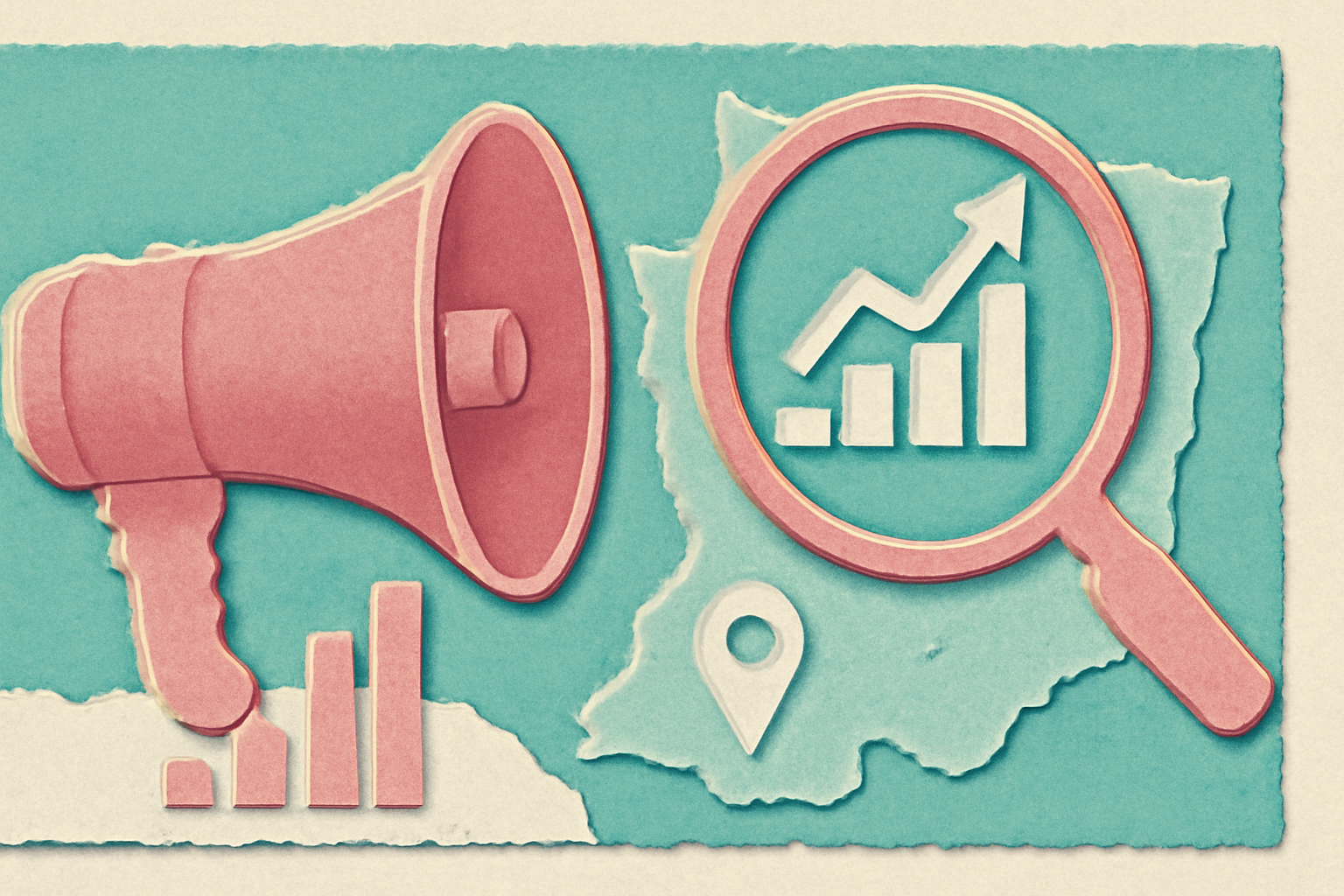
As we navigate the mid-2020s, the metrics that define success in local discovery are undergoing a significant transition. By analyzing emerging local seo statistics 2026, we see a clear departure from the 'more is better' approach to business listings that dominated the previous decade. (Last updated: January 2025).
According to research from Sammy Paget, Research Content Manager at BrightLocal, the efficacy of general citations has plateaued, while the weight of behavioral signals and niche-specific visibility has increased. We observe that for a 12-location HVAC operator, simply appearing in a hundred low-tier directories carries far less ranking weight than it did in 2020.
Are traditional citations becoming obsolete?
For years, the foundation of local SEO was the 'NAP' (Name, Address, Phone Number) consistency across hundreds of web directories. However, editorial observation suggest that search engines have become significantly more sophisticated in identifying business entities without relying on small, unmaintained directory sites. While foundational citations (such as Google, Apple Maps, and Bing) remain non-negotiable, the long tail of generic directory submissions is yielding diminishing returns.
Instead of broad volume, the data indicates a flight to quality. A dental practice in Leeds will find more SEO equity in a single placement on a healthcare-specific directory or an authoritative local community board than in fifty generic 'yellow page' clones. This represents a shift from quantity to authority that agencies must account for in their 2026 budgeting.
Adapting to new local seo statistics 2026
Recent data highlights a growing consumer reliance on interactive features within the Google Business Profile (GBP) interface. Rather than clicking through to a website, users are increasingly completing their journey entirely within the search ecosystem. This 'zero-click' trend is not merely a theory but a measurable shift in user behavior documented in recent industry surveys.
For agencies, this means shifting focus from link building to conversion rate optimization (CRO) within the local map pack. We have noted that profiles utilizing secondary features—such as integrated booking, updated price lists, and active 'Updates' posts—consistently outperform those that treat their GBP as a static business card. The gap between functional profiles and optimized profiles is widening.
The rising importance of industry-specific signals
One of the most compelling trends observed in recent datasets is the divergence of search behavior across different business archetypes. For instance, the factors that drive a customer to choose a lawyer are vastly different from those used to find a nearby coffee shop.
In the professional services sector, high-authority review signals and detailed service descriptions are becoming primary drivers of visibility. Conversely, in the food and beverage sector, visual attributes and near-real-time availability are the dominant factors. The data-backed strategy for 2026 requires agencies to build bespoke playbooks for each vertical rather than applying a universal checklist. This localized, vertical-specific approach is proving to be more effective than the broad-strokes local SEO of the prior era.
What this means for local businesses
To maintain visibility in an increasingly competitive map pack, business owners and agencies should prioritize the following actions:
- Audit for Quality Over Quantity: Evaluate current citation lists and eliminate spend on low-authority, generic directories that do not drive direct traffic.
- Optimize for High-Intent Features: Ensure that GBP booking buttons, product catalogs, and service menus are fully populated and regularly updated.
- Verticalize Citation Building: Focus new listing efforts exclusively on industry-specific platforms (e.g., Yelp for restaurants, Houzz for contractors) rather than general web directories.
- Monitor Behavioral Signals: Track map-based interactions like 'Get Directions' and 'Click-to-Call' as primary KPIs, rather than just keyword rankings.
Frequently asked questions
- Are citations still necessary for local SEO in 2026?
- Yes, but the focus has shifted. Foundational citations on major platforms like Google, Apple Maps, and Bing remain essential for establishing business entity trust. However, the importance of submitting to hundreds of smaller, generic directories has decreased significantly. Success now depends on local relevance and industry-specific authority.
- What Google Business Profile features drive the most conversions?
- High-intent features such as integrated appointment booking, regularly updated 'From the Business' posts, and detailed service/product menus are currently providing the highest ROI. These features allow users to complete their tasks without ever leaving the search results page, aligning with the rise of zero-click searches.
- How should agencies adjust their reporting for 2026?
- Reporting should move beyond just tracking keyword rankings. Agencies should focus on conversion-based metrics within the Google Business Profile, such as the number of click-to-calls, driving direction requests, and direct messages. These behavioral signals provide a more accurate picture of how local SEO efforts translate into real-world business revenue.
Follow us in Google
See Map Observer first in Top Stories
Google lets you choose the publications you want to see more of. Pick Map Observer and our local search reporting is surfaced higher in Top Stories — and badged as preferred in AI Overviews and AI Mode — whenever you search.
Related reading
Diagnosing a Sudden GBP Ranking Drop When Dashboard Metrics Look Normal