Mitigating the Decline of GMB Click-to-Call Rates in 2026
As Google transitions to AI-powered local packs and visual-heavy mobile interfaces, operators must pivot to a research-centric conversion strategy.
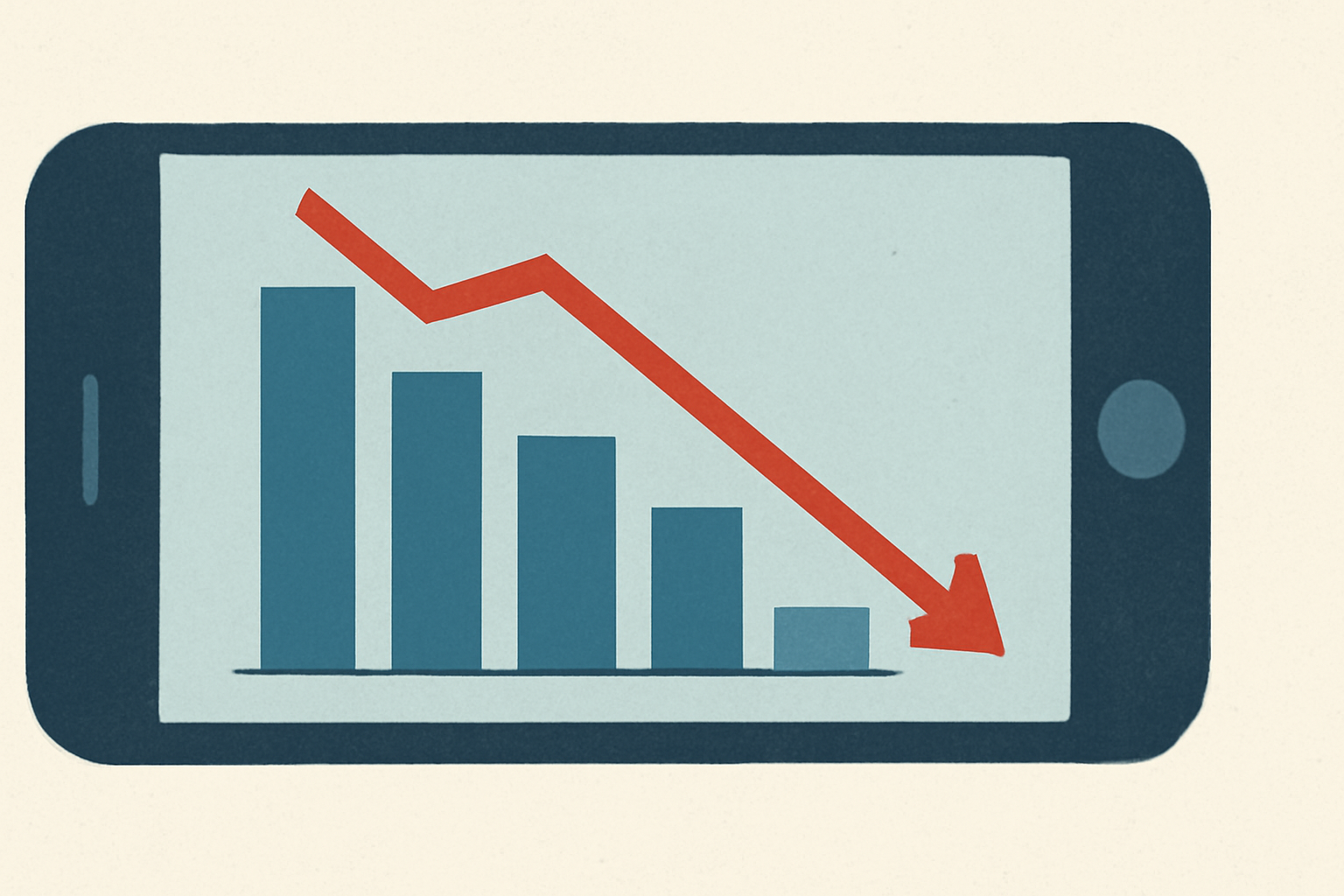
Traditional phone lead generation is facing a structural shift. According to an analysis by Joy Hawkins of Sterling Sky, last updated June 26, 2026, data suggests a consistent downward trend in phone actions from local listings even when rankings remain stable. For years, the 'Call' button was the definitive metric of success for local SEO; however, as Google evolves its mobile interface to prioritize AI-driven summaries and visual icons, the path to a conversion has become significantly more complex.
We are observing a fundamental move away from immediate 'click-to-call' behavior toward a more deliberate 'research-first' habit. While direct calls are dipping, website clicks from these same profiles have remained resilient or even increased on desktop. This suggests that while consumers still need local services, they are no longer satisfied with an immediate connection based on a star rating alone. They want more information before they dial.
Why is the Google Business Profile click-to-call decline happening?
The erosion of call volume is not a byproduct of lower search demand, but rather a result of intentional design changes within the Google ecosystem. Data provided by Jepto, which tracked 179 profiles for law firms over a 24-month period, confirms that while call metrics are sliding, website clicks are not following the same downward trajectory. This divergence highlights a change in user intent or, more likely, a change in how Google presents the options.
Two primary factors are driving this shift. Primarily, Google is replacing the traditional call button with high-resolution imagery in specific categories, such as the dental and home service sectors. When a visual icon replaces a utility button, users are subtly nudged toward exploring the business's visual credentials rather than making an immediate vocal connection. Furthermore, the advent of AI-powered local packs in the USA—which currently appear for approximately 7% of tracked mobile keywords—often omits the call button entirely, focusing instead on a curated summary of a business’s capabilities.
Growth of AI-powered local packs and zero-click search
Google's AI-powered local packs are significantly more restrictive than the traditional '3-pack' we have managed for the last decade. While a standard local pack features three distinct businesses, the AI-driven alternative often highlights only one or two. According to data from Places Scout, these new AI packs surface only about 32% of the unique businesses that traditional packs do. If a 12-location HVAC operator was previously appearing in three separate neighborhood packs, they may now find themselves fighting for a single spot in a narrowed AI summary.
This shift creates a 'winner-take-all' environment where the absence of a call button forces the user to either click the profile or visit the website. This transition moves local SEO from a game of visibility to one of high-intent conversion optimization. Compared to the era before 2025, where a simple phone number was enough to drive volume, businesses must now treat their website as the primary closing tool for traffic that originated on a map pin.
Optimizing mobile landing pages for redirected traffic
If the user is no longer calling from the search results page, the mobile landing page must perform the heavy lifting that the Google Business Profile used to do. A dental practice in Leeds, for example, can no longer rely on 'Map Pack' visibility alone. They must ensure that the 'Website' click leads to a page that mirrors the urgency of a phone call.
We recommend a 'direct-to-conversion' design for local landing pages. Since the user has already seen your Google reviews and location, the landing page should not repeat basic brand awareness. Instead, it should offer a prominent 'Tap to Call' button at the top of the mobile screen, a simplified booking form, and immediate social proof. If users are being forced into a research phase, your mobile site must provide that information faster than the competitor's site while keeping the call option visible at every scroll point.
What this means for local businesses
To counter the loss of direct phone leads, operators and agencies must refocus their strategy on the 'middle' of the funnel—the moment between the Google search and the actual lead capture.
- Shift KPIs to Website Conversions: Stop measuring local SEO success solely by 'GMB Calls.' Start tracking 'Website Calls' and 'Form Submissions' originating from organic mobile traffic.
- Audit for Visual Competiveness: Since Google is replacing call buttons with images, ensure your profile's first five photos are professionally shot and representative of your primary service.
- Optimize Mobile Page Speed: If the consumer is forced to visit your website before calling, every millisecond of load time is a potential lost lead. Use lightweight images and minimal scripts on mobile landing pages.
- Implement Direct Booking: If the call button is missing from the search results, provide a 24/7 online booking alternative on your site to capture users who prefer not to use the phone for initial contact.
Sources
Frequently asked questions
- Why did my Google Business Profile call button disappear?
- Google is frequently testing and rolling out new mobile layouts. In many industries, such as home services and dentistry, the 'Call' button is being replaced by service images or integrated into an AI-powered local pack. This change is designed to provide more context to the user before they contact a business, though it often results in a decrease in immediate call volume.
- Are people searching for local businesses less often?
- No. Search volume for local intent remains strong, but the way users interact with the results is changing. Instead of the 'zero-click' call, users are being funneled toward clicking through to the website or interacting with AI Overviews. This shift means that while the front-end visibility is still there, the immediate conversion path has shifted from the Google results page to the business's own mobile site.
- How can I track leads properly if click-to-call is down?
- You should use dynamic number insertion (DNI) or unique tracking numbers on your website for users who arrive via your Google Business Profile. Since more users are clicking 'Website' before calling, tracking only the calls made directly from the 'Call' button on Google will drastically undercount the actual ROI of your local SEO efforts.
Follow us in Google
See Map Observer first in Top Stories
Google lets you choose the publications you want to see more of. Pick Map Observer and our local search reporting is surfaced higher in Top Stories — and badged as preferred in AI Overviews and AI Mode — whenever you search.
Related reading