Mitigating the 'Ghost Address' Effect During GBP Relocations
Why Google Business Profile address changes can fail to re-anchor map pins, and how to audit coordinates via Geocoding API.
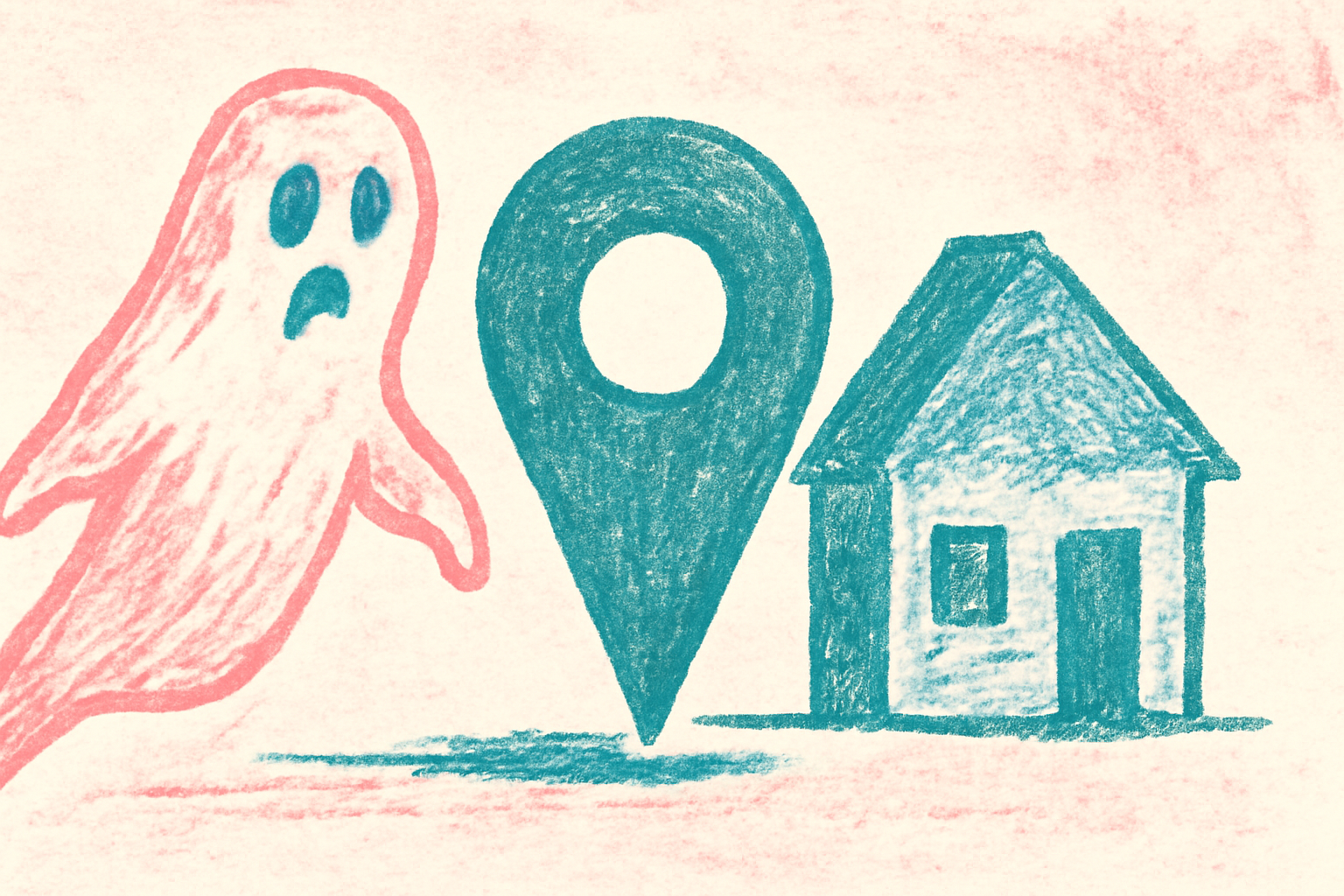
Address updates in the Google Business Profile (GBP) dashboard are often perceived as simple administrative tasks. However, for many operators, these changes trigger a significant GBP address change ranking drop that persists even after successful verification. Our analysis indicates that Google’s database frequently retains the "anchor" of a previous location long after the visible address has been updated, creating a technical haunting known as the "ghost address" effect. Last updated July 27, 2026, by Claudia Tomina, these findings suggest that the physical coordinates assigned to a listing may remain tethered to the point of origin, especially for service-area businesses (SABs).
Why does a GBP address change ranking drop occur?
When a business updates its physical location, it assumes the algorithmic proximity calculation will instantly pivot to the new coordinates. In practice, Google treats the text address and the geocoded map pin as distinct data points. For a 12-location HVAC operator moving a central dispatch office, the "functional map pin"—the invisible coordinate used to calculate distance from a searcher—may fail to move if the profile was originally registered at a residential address or a P.O. box.
We observe that this issue is most prevalent among SABs that hide their addresses. When the address is obscured, the system often defaults to the registration anchor. Unlike a storefront that must physically prove its existence at a specific rooftop, an SAB listing can remain "haunted" by the location where it was first verified, leading to rankings that appear to radiate from an empty field or a former office five miles away.
Can we use the Geocoding API to audit address integrity?
To diagnose whether a listing is suffering from a coordinate mismatch, we recommend utilizing the Google Geocoding API. This tool allows an operator to see exactly how Google’s engine resolves a text string into latitude and longitude. Before initiating a move, a dental practice in Leeds should run their new address through the API to ensure Google can resolve it to a precise building coordinate rather than a vague neighborhood centroid.
If the API returns a "partial match" or a "locality" result rather than a "rooftop" result, the listing is at high risk for ranking instability. By comparing the API's output for the new address against the listing’s current ranking heatmaps, practitioners can identify if the profile is still being anchored by historical data. In cases where the historical "ghost" data is too deeply embedded, we believe that starting fresh with a new profile is sometimes safer than inheriting a legacy profile's hidden baggage.
Managing the risks of inherited SAB profiles
Inheriting a profile from a previous owner or a defunct agency carries hidden risks. If that listing was originally verified using a P.O. box or a virtual office—both violations of current guidelines—the profile may carry an underlying "integrity" flag. When you attempt to update the address to a legitimate commercial space, the sudden change in coordinates can trigger an immediate suspension.
We have found that Google’s automated verification systems are more sensitive to address changes than almost any other profile edit. Compared to how this worked in previous years, where a move was a routine update, the current environment treats a relocation as a high-risk event that often requires video verification to resolve.
What this means for local businesses
- Audit before you move: Use the Google Geocoding API to confirm your new address resolves to a specific rooftop coordinate before updating the GBP dashboard.
- Verify anchor stability: After a move, monitor local ranking heatmaps to see if your "center of gravity" has actually shifted to the new location or remained at the old one.
- Evaluate the 'Fresh Start': If a profile has a history of P.O. box verification or repeated suspensions, consider the long-term benefits of creating a new listing rather than attempting to fix a corrupted history.
- Document everything: Prepare utility bills and signage photos specifically for the new location in anticipation of a mandatory re-verification trigger.
Sources
Frequently asked questions
- Why did my rankings stay at my old location after I updated my address?
- This is often due to 'coordinate anchoring.' Google's system may still be using the latitude and longitude from your original verification to calculate proximity. This happens frequently with service-area businesses that hide their addresses. Even though the text in your dashboard is new, the functional map pin used by the algorithm hasn't moved, causing your profile to rank in your old neighborhood instead of the new one.
- How can the Geocoding API help with a GBP relocation?
- The Geocoding API reveals how Google interprets your address. If the API cannot resolve your new office to a 'rooftop' level accuracy, the ranking algorithm may struggle to anchor your business correctly. By auditing the address before you make the change, you can identify if there are formatting issues or mapping errors that will lead to a ranking drop after the move is finalized.
- Should I just create a new Google Business Profile when I move?
- We suggest considering a new profile if the current one has a 'dirty' history, such as being verified at a P.O. box or a virtual office. Inheriting that historical data can lead to integrity suspensions during a move. However, you will lose existing reviews unless you successfully request a review transfer from Google support, so this decision should be balanced against the value of your existing social proof.
Follow us in Google
See Map Observer first in Top Stories
Google lets you choose the publications you want to see more of. Pick Map Observer and our local search reporting is surfaced higher in Top Stories — and badged as preferred in AI Overviews and AI Mode — whenever you search.
Related reading