Google Tightens Restrictions on Bilingual and Transliterated Business Names
Updated Merchant Guidelines aim to reduce keyword stuffing through script duplication and repeated naming conventions.
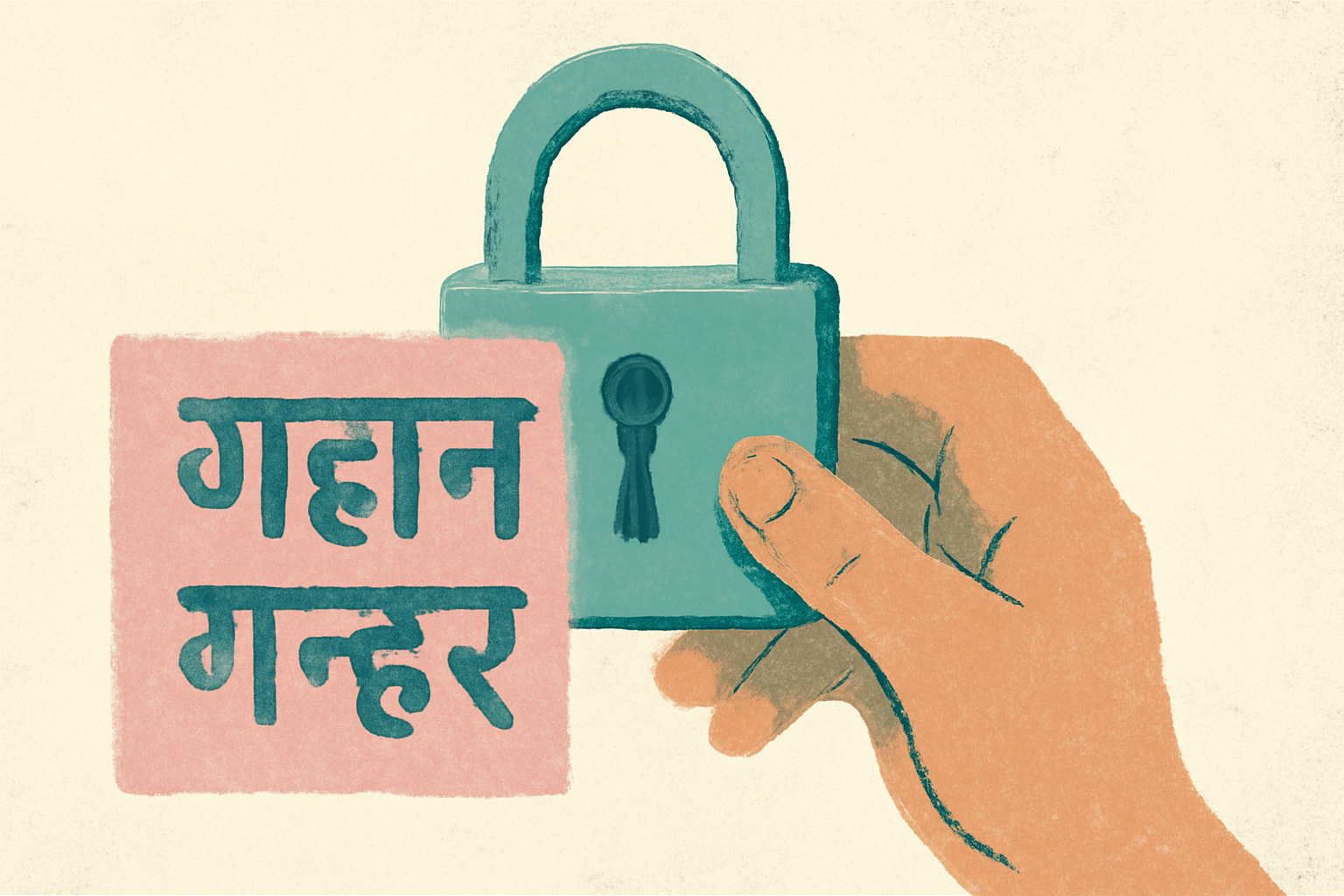
Google has updated its core documentation to enforce stricter control over how businesses represent themselves in international markets. Last updated on August 14, 2026, the latest Google Business Profile naming guidelines now explicitly prohibit the use of repeated bilingual names and transliterated scripts in the business title field. We have observed that this move signals a transition from a loosely monitored practice to a formal enforcement phase, potentially leading to increased profile suspensions for those who fail to comply.
For years, many international operators—such as a dental practice in Leeds serving a large South Asian community or a 12-location HVAC operator in Montreal—have used dual-language names to capture searches in multiple scripts. While this was often intended as a service to local customers, it frequently devolved into a form of keyword stuffing that cluttered the Google Maps interface. The new mandate requires that the name field reflect the business's real-world name as it appears on signage and legal documentation, without extra translations appended to it.
Why is Google restricting bilingual names now?
We believe this policy shift is driven by the need for data uniformity across its ecosystem. When a business lists itself as "Tokyo Sushi - 東京寿司," it is providing the same information twice in two different scripts. While helpful for a human reader, it complicates Google’s ability to verify the entity against third-party data sources like official government registries or utility bills, which rarely use dual-script formatting.
Furthermore, Google’s internal translation capabilities have improved significantly. The platform now possesses the ability to automatically translate or transliterate business names based on the user's language settings. By forcing businesses to stick to a single, primary name, Google removes the "slop" that often occurs when manual translations are used to manipulate local search rankings. This represents a major change vs. how this worked before, where local SEOs could often get away with adding secondary scripts to boost visibility in specific neighborhoods.
The Risks of Transliterated Naming for International Brands
Transliteration—the process of representing the sounds of one language in the script of another—has long been a grey area in local search. A Japanese brand entering the UK market might be tempted to list its name in both Katakana and Latin characters. Under the updated Google Business Profile naming guidelines, this is now a clear violation if the physical signage does not support both scripts.
If we look at a multi-location entity, like a hotel chain operating in both Dubai and London, the temptation to use "Hilton - هيلتون" is high. However, Google’s updated policy clarifies that the business name must be the "single name" used in the real world. Failure to adhere to this can lead to an immediate "hard suspension," where the profile is removed from search results until a reinstatement request is filed with proof of compliant signage.
How does this impact local search visibility?
Many operators fear that removing secondary scripts will hurt their ability to rank when users search in that specific language. However, Google's algorithms are increasingly sophisticated at mapping language intent. If a user in London searches for a business using Arabic script, Google will attempt to match that query to relevant businesses even if their primary name is in English, provided other signals (like the business description, reviews, or website content) bridge the gap.
This is a fundamental shift in strategy. Instead of relying on the name field for SEO, we recommend that businesses focus on their "About" section and the "Services" descriptions to house multilingual keywords. This keeps the profile compliant while still providing the necessary context for Google’s crawlers to index the business for diverse search terms.
What this means for local businesses
To ensure your profile remains active and compliant with the new standards, we suggest the following actions:
- Audit Your Current Naming: Review all managed profiles for any instances of "Business Name - [Translation]" or "Business Name ([Script])".
- Align with Physical Signage: Ensure the name in your Google Business Profile matches exactly what a customer sees on your front door. If your signage is monolingual, your digital profile must be as well.
- Leverage Non-Title Fields: Use the business description and Google Posts to communicate that your staff speaks multiple languages or to provide translated context for your services.
- Monitor Regional Settings: Ensure your website uses correct
hreflangtags, which helps Google understand the relationship between your various language offerings without needing to clutter the Business Profile title.
Frequently asked questions
- Can I still list my business name in two languages if my signage has both?
- Yes. Google’s primary rule is that your digital name must reflect your real-world representation. If your physical storefront signage in Leeds or Dubai features both English and another script, you are generally permitted to include both in your profile. However, you must avoid 'repeated' names where the second script is merely a translation added for SEO purposes rather than a reflection of your brand's legal and physical identity.
- Will removing my translated name hurt my rankings in local searches?
- While the name field is a strong ranking signal, Google's ability to understand language intent has evolved. By using the 'Description' field, 'Services' section, and providing multilingual content on your linked website, you provide enough signals for Google to surface your business for non-English queries. Keeping a clean, compliant name field reduces the risk of suspension, which is a far greater threat to your visibility than the loss of a script-specific keyword.
- What should I do if my Google Business Profile is suspended for naming violations?
- If you receive a suspension notice related to your business name, you should immediately update the name to match your official signage. Once updated, you can submit a reinstatement request. You will likely need to provide evidence, such as a high-resolution photo of your permanent storefront sign or a business license that matches the single-language name you are now using.
Follow us in Google
See Map Observer first in Top Stories
Google lets you choose the publications you want to see more of. Pick Map Observer and our local search reporting is surfaced higher in Top Stories — and badged as preferred in AI Overviews and AI Mode — whenever you search.
Related reading