Deciphering Google’s 2026 Review Enforcement: Hidden Realities of Policy Violations
Navigating the gap between official documentation and real-world enforcement for agency operators.
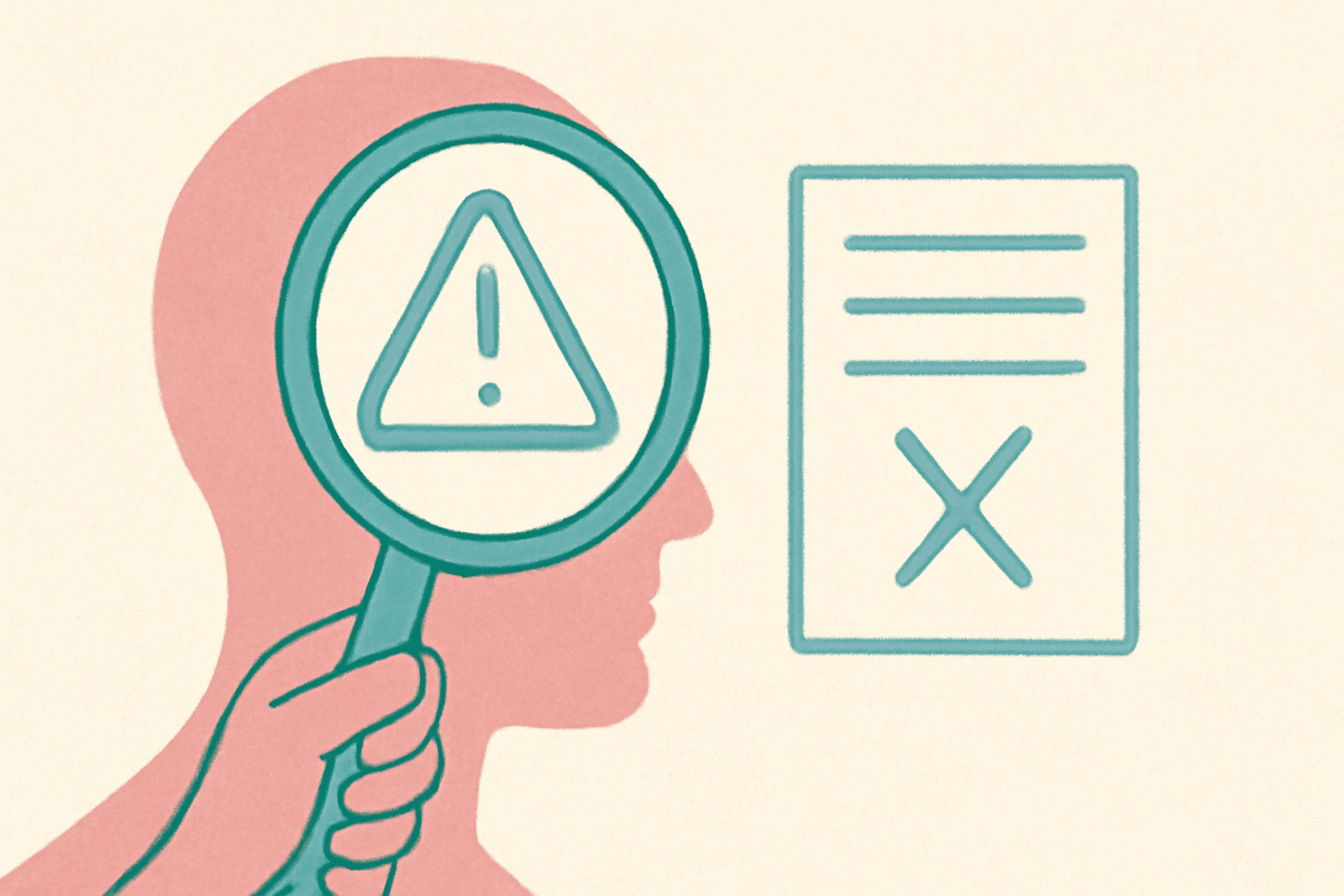
Google review policy violations represent a critical friction point between local businesses and the platform's automated integrity systems. As of the latest updates, including the policy refreshes from January 2026, the delta between what Google claims to prohibit and what its algorithms actually catch has widened significantly. For agencies managing local SEO at scale, understanding this technical gap is the only way to protect a client's reputation from sophisticated spam attacks that bypass basic filters.
The widening gap in Google review policy violations
Google maintains that its review ecosystem is governed by a strict set of content guidelines designed to prioritize genuine, firsthand experiences. However, the reality for a 12-location HVAC operator in Phoenix or a dental practice in Leeds is often quite different. While the official documentation lists prohibited content—such as spam, fake reviews, and harassment—the enforcement mechanism is almost entirely reliant on machine learning models that prioritize pattern recognition over context.
We have observed that the 2026 iteration of these models relies heavily on BERT (Bidirectional Encoder Representations from Transformers) to assess sentiment, yet it frequently fails to detect irony or professionally written fake content. In previous years, reporting a review for "conflict of interest" might have triggered a human look if the business provided enough context. Today, the system is designed for speed, which means legitimate reports often get stuck in a "no violation found" loop. We have observed that Google’s systems are increasingly sensitive to velocity; for instance, a business that earns a sudden surge of 500 reviews in a short window may face an automated "nuke" of those reviews, regardless of their authenticity. This compares unfavorably to the 2022-2023 era where such spikes triggered a temporary hold rather than an outright deletion of the business's historical social proof.
What counts as a review violation in 2026?
To successfully navigate an appeal, one must understand the specific categories Google uses to classify violations. The terminology used in the reporting dashboard is precise, and choosing the wrong category often leads to an immediate automated rejection. These include:
- Deceptive Content: This encompasses fake reviews written by competitors, former employees, or paid services. Google’s "Helpful Content" updates now cross-reference these against known PBN (Private Blog Network) footprints.
- Incentivization: Google explicitly forbids offering discounts, free products, or cash in exchange for a review. This includes subtle nudges used by reputation management software like Podium or Birdeye if the call-to-action is tied to a reward.
- Review Gating: The practice of using a third-party tool to screen for happy customers before sending them to Google is a clear violation of terms. Detection is now frequently triggered by specific URL parameters in the referral string.
- Harassment and Hate Speech: Content that contains slurs or targets specific individuals by name is technically removable, though enforcement is inconsistent unless the text matches a pre-defined library of prohibited terms.
Why does Google ignore clear policy violations?
If a review is clearly written by a disgruntled ex-employee or a competitor, why does it often remain live? The issue lies in the burden of proof. Google does not have access to a business's payroll records or internal CRM data from tools like Salesforce or ServiceTitan. If the reviewer uses a pseudonym and stays "on-topic" by criticizing the service quality, the automated filter sees it as a legitimate customer opinion.
Unlike platforms like Yelp, which may use more aggressive filtering based on user activity levels and IP consistency, Google leans toward keeping content live unless it triggers a specific technical flag, such as an IP address mismatch or a known spam account fingerprint. This creates a high hurdle for a boutique floral shop or a mid-sized law firm trying to scrub a fraudulent smear campaign.
How to report Google review policy violations effectively
When a dental practice in Leeds receives a wave of one-star reviews from accounts with no local history, a generic "This is fake" report will likely fail. Instead, we recommend a tactical approach that bypasses the initial automated rejection. The goal is to provide data that the algorithm can process as a binary violation rather than an emotional plea.
For those wondering how to report Google review policy violations in a way that actually sticks, the sequence matters. First, document the reviewer's history. If the account has reviewed ten locksmiths across three continents in 48 hours, that is a pattern the algorithm is trained to flag once prompted. Second, use the "Review Management Tool" found within the Google Business Profile Help Center rather than just clicking the three dots on the public Map listing. This tool provides a case ID, which is essential for escalating the matter if the initial report is denied.
Tactical framework for evidence-based appeals
- Identify the specific guideline: Do not just say the review is "bad." Categorize it specifically as "Spam and fake content" or "Conflict of interest." If the text contains a link or a phone number, use the "Spam" category, which has the highest removal rate.
- Cross-reference public data: If the reviewer also reviewed five other businesses in different countries on the same day, document that behavior with screenshots. This is particularly effective for multi-location brands like franchise fitness centers.
- Use the Business Dashboard: Ensure the report is tracked in the business dashboard. This creates a paper trail that can be used if you eventually need to contact Google Support via their formal appeal form (formerly known as the redressal form).
What this means for local businesses
For operators and agencies, the current state of enforcement requires a shift from reactive reporting to proactive reputation management. The platform is less forgiving of technical infractions than it was in the past.
- Stop all forms of review gating. If Google detects that you are only asking happy customers for feedback via a pre-screening landing page, you risk losing your entire review history. Their new "merchant behavior" signals can identify if your conversion rate from 'ask' to 'post' is statistically impossible.
- Monitor review velocity. A sudden spike in reviews—even if they are from real customers—can trigger a "review ghosting" phase where no new reviews appear for weeks. This is a common issue for grand openings or viral marketing events.
- Document employee departures. Keep records of dates when staff leave, as these are the most common sources of malicious but "realistic-looking" fake reviews that may require a manual appeal. If a review appears within 24 hours of a termination, it is much easier to dispute.
- Avoid incentives entirely. Do not offer a "chance to win a gift card" for a review. These patterns are easily detected by modern sentiment analysis and NLP (Natural Language Processing) tools Google employs to scan for keywords like "contest," "entry," or "draw."
Sources
Frequently asked questions
- How long does Google take to process a review violation report in 2026?
- In 2026, the initial automated assessment typically occurs within 24 to 72 hours. If the review is not removed automatically, an appeal through the Review Management Tool can take an additional 5 to 10 business days. For complex cases involving legal threats or severe harassment, the process may extend longer if manual intervention from the Google support team is required, though human oversight is increasingly rare for standard spam reports.
- Can I get a review removed if it was written by a former employee?
- Yes, reviews by former employees are considered a 'Conflict of Interest' under Google's policy. However, proving this is difficult because Google lacks access to your HR records. To succeed, you must provide evidence such as the reviewer's real name matching a public LinkedIn profile or termination record. If the reviewer uses a pseudonym and doesn't explicitly mention their employment in the text, Google's automated systems are unlikely to remove it without a formal appeal.
- What is 'review ghosting' and why is it happening to my business?
- Review ghosting occurs when customers leave legitimate reviews that are visible to them but not to the public. This typically happens when Google’s AI flags the review as suspicious due to the user's IP address, the business's sudden spike in review velocity, or if the user is using a VPN. In 2026, this has become a common automated defense mechanism against perceived spam attacks, even affecting genuine customers who are using public Wi-Fi.
- Is it still a violation to ask only happy customers for reviews?
- Yes, this practice is known as 'review gating' and remains a major violation of Google’s terms of service. Google’s algorithms have become more sophisticated at detecting the software footprints of gating tools. If the platform identifies that a business is pre-qualifying reviewers through a landing page or private feedback form before directing them to the Google listing, it may result in the suspension of the entire Google Business Profile.
Follow us in Google
See Map Observer first in Top Stories
Google lets you choose the publications you want to see more of. Pick Map Observer and our local search reporting is surfaced higher in Top Stories — and badged as preferred in AI Overviews and AI Mode — whenever you search.
Related reading